Buying Japanese Whisky in Japan: Prices, Tips, and What Tourists Get Wrong
Quick Takeaway
- Best deals: domestic market bottles like Kakubin, Suntory Old, and Super Nikka you can’t easily find abroad. Premium bottles (Yamazaki 12, Hakushu 12) are allocated and hard to find.
- Convenience store canned highballs (under ¥300) are one of the best drinking experiences in Japan.
- Tax free shopping saves 10% at qualifying stores (passport + ¥5,000 minimum).
- Customs limit: most countries allow 1 to 2 liters duty free. Know your limit before buying bulk.
The Pricing Reality: What’s Cheaper and What’s Not
The biggest misconception tourists have about Japanese whisky in Japan is that everything is cheaper. It’s not.
Here’s how it breaks down.
Bottles That Are Genuinely Cheaper in Japan
The best value comes from bottles made for the domestic market. These are widely available, reasonably priced, and either impossible or overpriced to find outside Japan:

Suntory
Suntory Kakubin

Suntory
Suntory Old Whisky

Nikka
Super Nikka

Suntory
Suntory Special Reserve
Suntory Kakubin runs about ¥1,200 to ¥1,500 for 700ml at supermarkets and liquor stores. Outside Japan, if you can find it at all, it costs two to three times that. It’s the backbone of the Japanese highball and the reason every izakaya in the country has a yellow bottle behind the bar.
Suntory Old is another domestic staple, priced around ¥1,500 to ¥2,000. It’s richer and more complex than Kakubin, with dried fruit and toffee notes that punch above its price. Japanese drinkers call it “daruma” (the rotund good luck charm) because of the bottle shape. Good luck finding it for a reasonable price overseas.
Super Nikka sits in the same range and delivers honey, caramel, and dried fruit. It’s a blended whisky that Nikka positions as a step up from their everyday lineup, and in Japan it costs about what a mediocre bottle of bourbon costs back home.
Suntory Special Reserve rounds out the domestic value tier. These four bottles represent the sweet spot: quality whisky that Japanese people drink regularly, priced for everyday consumption, and all JSLMA compliant.
Bottles That Aren’t Necessarily Cheaper
Suntory Toki retails for about ¥1,500 to ¥2,000 in Japan. Depending on the exchange rate, you might save a few dollars compared to US retail. Maybe. It’s not worth building a trip strategy around.
Hibiki Harmony is another bottle where the savings aren’t dramatic. Japanese retail is roughly ¥8,000 to ¥10,000 depending on the store. US and European prices aren’t far off once you factor in exchange rates. You’ll save something, but it’s not the 50% discount people imagine.
Nikka From The Barrel is widely available in Japan for about ¥3,000 to ¥4,000. That’s a solid price, but it’s also available in many European markets for comparable money. Worth grabbing if you see it, but not a Japan exclusive bargain.
Bottles That Cost More Than You Think
Yamazaki 12 and Hakushu 12 are the bottles tourists dream about buying in Japan. The retail price (定価) for Yamazaki 12 is ¥16,500, but finding it at that price requires luck with department store lotteries or allocation draws. What you CAN do is buy it online through Rakuten or Amazon JP at ¥22,000 to ¥25,000, or find it at specialist liquor shops for a similar markup. That’s still often cheaper than international retail (typically $200+ in the US), so it’s worth considering if you want one.
At tourist-facing shops like Don Quijote, expect to see these bottles at ¥30,000 to ¥40,000 or higher. That’s not a deal.
The truly rare bottles (Yamazaki 18, Hibiki 21) are a different story. Those are genuinely scarce even in Japan, and if you see a Yamazaki 18 at a souvenir shop near Sensoji for ¥80,000, walk away.
The Convenience Store Secret
This is the tip that surprises most visitors: some of the best whisky experiences in Japan come from convenience stores.
Canned Highballs
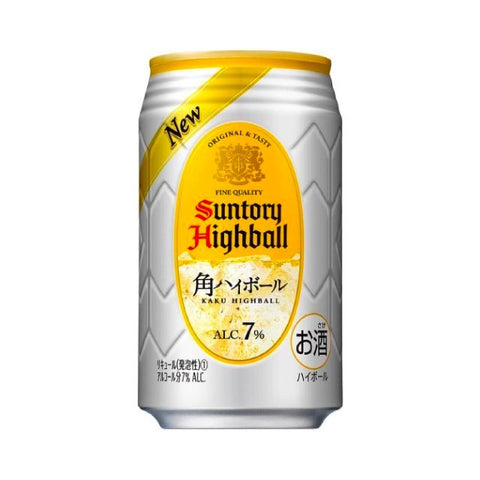
Suntory
Suntory Kakubin Highball Can
Every 7 Eleven, Lawson, and FamilyMart stocks canned highballs. The Suntory Kakubin Highball Can costs about ¥200 to ¥250 and tastes better than most highballs you’ll get at a bar in other countries. It’s pre mixed at the right ratio, perfectly carbonated, and served ice cold from the cooler.
Other canned options worth trying:
- Kaku Koime (角濃いめ): The higher whisky ratio version of the standard Kaku highball. Same price, more punch.
- Black Nikka Clear Highball: About ¥180 to ¥200. Lighter and sweeter than the Suntory options.
- Jim Beam Highball: ¥200 to ¥250. The American alternative, made for the Japanese market.
- Torys Highball: ¥150 to ¥180. The budget option. Simple and drinkable.
Grab a couple of different cans, find a park bench or a riverbank, and you’ve got yourself a ¥500 tasting flight. This is how millions of Japanese people enjoy whisky on a Tuesday evening.
Bottles at Convenience Stores
Convenience stores also carry small bottles (180ml to 200ml) of brands like Black Nikka Rich Blend, Suntory Kakubin, and Suntory Toki for ¥300 to ¥500. These are perfect for trying before committing to a full bottle. The selection won’t match a liquor store, but for casual drinking in your hotel room, it’s hard to beat the convenience.
Tax Free Shopping: How to Save 10%
Japan’s consumption tax is 10%. Foreign tourists can get this waived on qualifying purchases, which adds up fast when you’re buying whisky.
Important: starting November 1, 2026, Japan is switching to a refund at departure system. Instead of getting tax removed at the register, you’ll pay the full price including tax and claim a refund at the airport before you leave. The rules below apply until that changeover.
The Rules (Current System, Until October 2026)
- You need your passport. The shop scans it and records the purchase. No passport, no tax free.
- Minimum purchase of ¥5,000 (before tax) per store, per day. Two ¥2,000 bottles at the same store in one visit qualifies. Those same bottles at two different stores does not.
- Consumable goods (which includes alcohol) must leave Japan unopened. The shop seals them in a bag. Open the bag and drink the whisky before departure, and technically you owe the tax.
- You must leave Japan within 6 months of purchase.
Where Tax Free Applies
Most major retailers offer tax free: BIC Camera, Don Quijote, department stores, and some specialist liquor shops like Liquors Hasegawa. Look for the “Tax Free” or “免税” sign at the entrance.
Smaller independent liquor stores usually don’t offer it. If you’re buying from a specialist shop, ask before you start filling your basket.
Is It Worth the Hassle?
On a single bottle of Kakubin, you’re saving about ¥120. Not life changing. But if you’re buying five or six bottles to bring home, the 10% adds up to a meaningful discount. A ¥50,000 whisky haul becomes ¥45,455 tax free. That’s another bottle of Suntory Old basically for free.
What You Can Bring Home: Customs and Duty Limits
This is where many tourists get caught off guard. You can buy as much whisky as you want in Japan. Getting it through customs at home is a different story.
Duty Free Allowances by Country
- United States: 1 liter of spirits duty free. You can bring more, but you’ll pay duty on anything beyond that. The general personal exemption applies to your total purchases, not just alcohol.
- United Kingdom: 4 liters of spirits duty free from non EU countries.
- European Union: Generally 1 liter of spirits duty free. Varies slightly by member state.
- Australia: 2.25 liters duty free.
- Canada: 1.14 liters duty free.
If you’re from the US and you bought three 700ml bottles, you’re at 2.1 liters. One liter is duty free, and you’ll owe duty on the remaining 1.1 liters. The duty rate varies, but it’s usually a few dollars per bottle. Not ruinous, but worth knowing about before you fill your suitcase.
Packing Tips
- Always pack whisky in checked luggage. Carry on liquid restrictions apply, and you don’t want to lose a ¥10,000 bottle at security.
- Wrap bottles individually in clothing or bubble wrap. Hotels often have packing materials if you ask.
- Consider a wine shipping bag (the inflatable kind). They’re cheap, light, and protect bottles better than a t shirt.
- Keep receipts for customs declarations. Some countries want them.
Five Mistakes Tourists Make When Buying Whisky in Japan
1. Buying Popular Bottles at Don Quijote
Don Quijote (ドン・キホーテ) is great for snacks, cosmetics, and random souvenirs. For popular whisky bottles, it’s one of the worst places to buy. Hibiki Harmony and Yamazaki 12 (when they have them) carry markups of 30% or more over standard retail.
Don Quijote is fine for cheap everyday bottles like Black Nikka Rich Blend or Suntory Toki where there’s less room to mark up. But for anything in the mid range or above, go to a proper liquor store.
2. Assuming Airport Duty Free is the Best Deal
Airport duty free shops have limited Japanese whisky selection and prices that are comparable to, or sometimes higher than, street retail. The Narita and Haneda shops focus mostly on Scotch and international brands. The few Japanese bottles they stock (Toki, sometimes Taketsuru) aren’t significantly discounted.
Our airport buying guide covers this in detail, but the short version is: buy in the city, not at the gate.
3. Expecting to Find Allocated Bottles on Shelves
Popular aged bottles like Yamazaki 12 and Hakushu 12 are available in Japan, but not at retail price. The official price for Yamazaki 12 is ¥16,500, but the market price is ¥22,000 to ¥25,000 online and at specialist shops. You can buy them. Just don’t expect to walk into a random liquor store and find one at the sticker price. Specialist shops like Liquors Hasegawa or online through Rakuten are your best bet. Hibiki 17 and anything with a higher age statement is genuinely scarce and priced accordingly (¥50,000+).
What shops DO have in abundance: the domestic market bottles that are worth your attention anyway.
4. Ignoring the Domestic Market Bottles
Tourists who come looking for Yamazaki 12 and leave empty handed miss the whole point. The bottles Japanese people drink every day, the ones lining the shelves of every supermarket and liquor store, are the real finds:

These are JSLMA compliant Japanese whiskies, priced for domestic consumption, and either unavailable or overpriced in most export markets. Suntory Old for ¥1,800 is one of the best whisky values anywhere in the world.
5. Not Trying Convenience Store Highballs
We covered this above, but it bears repeating: the canned highball is a cultural experience as much as a drinking experience. Skipping it because “it’s just a can” is like visiting Naples and skipping pizza because “it’s just takeaway.”
Where to Shop: Quick Recommendations
For specific shop recommendations in Tokyo (Liquors Hasegawa, Shinanoya, Yamaya, and more), see our Tokyo whisky buying guide.
The general rules apply nationwide:
- Supermarkets and liquor store chains (Yamaya, Liquor Mountain) have the best everyday prices.
- Electronics stores (BIC Camera, Yodobashi Camera) offer tax free, point cards, and decent selections. Convenient if you’re buying electronics anyway.
- Department store basements (depachika) carry premium selections with knowledgeable staff. Prices are fair, and tax free is standard.
- Specialist whisky shops have the best curation but may not offer tax free. Worth visiting for the expertise and the chance to find bottles you won’t see elsewhere.
- Convenience stores for canned highballs and mini bottles. No tax free, but at these prices, you don’t need it.
JSLMA: Why It Matters When Shopping in Japan
Japan’s JSLMA standards (Japan Spirits & Liqueurs Makers Association) define what can be called “Japanese Whisky.” Not every bottle with Japanese text on the label qualifies. When you’re shopping in Japan, look for bottles from Suntory, Nikka, and established distilleries like Chichibu, Kanosuke, and Mars Shinshu.
Some bottles sold in Japan use imported bulk whisky and package it with Japanese branding. They’re not necessarily bad, but they’re not what most tourists think they’re buying. Nikka From The Barrel is a great example of the gray area: it’s an excellent whisky, it’s made by Nikka in Japan, but it includes Scottish malt from Ben Nevis and doesn’t meet JSLMA standards for the “Japanese Whisky” designation.
Being informed about this before you shop means you’ll know exactly what you’re getting.
The Bottom Line
The best strategy for buying whisky in Japan is simple: focus on the bottles you can’t get at home. The domestic market blends, the canned highballs, the regional bottles from smaller distilleries that don’t export. These are the finds that make shopping in Japan worthwhile.
Don’t chase the age stated single malts that everyone else is chasing. Don’t overpay at tourist shops. And whatever you do, try a Kaku Highball from a convenience store on your first night.
It costs less than a cup of coffee and it’s one of the best introductions to Japanese whisky culture you’ll find.