Mars Whisky Complete Lineup Guide: Iwai, Komagatake, and Tsunuki
Quick Takeaway
- The brand: Mars Whisky is made by Hombo Shuzo, Japan’s third major whisky producer behind Suntory and Nikka, with roots going back to 1949.
- Two distilleries, three climates: Mars Shinshu in the Nagano Alps (798m elevation) produces lighter, more delicate malt, while Tsunuki in southern Kagoshima makes richer, more tropical spirit. A third aging site on Yakushima Island adds coastal maturation.
- Start here: Iwai 45 or Iwai Tradition for an entry level introduction. Mars Komagatake for serious single malt.
- JSLMA status: The Iwai blends and Komagatake/Tsunuki single malts are all JSLMA compliant. Mars Maltage Cosmo and Mars Maltage 3+25 are not, as they contain imported Scottish malt.
- Availability: Iwai bottles are widely available in the US through High Road Spirits. Komagatake and Tsunuki single malts are harder to find and often sell through limited allocation.
Who Is Hombo Shuzo?
Most conversations about Japanese whisky start and end with Suntory and Nikka. That leaves out Hombo Shuzo, a company that has been making spirits since 1872 and whisky since 1949.
The Hombo family started as shochu distillers in Kagoshima, on the southern island of Kyushu. After World War II, they obtained a whisky production license and began distilling under the guidance of Kiichiro Iwai. If that name sounds familiar, it should. Iwai was the executive at Settsu Shuzo in Osaka who sent Masataka Taketsuru to Scotland in 1918 to study whisky making. Taketsuru’s detailed notes on Scottish distilling, known as the Taketsuru Report, later became the foundation for Nikka. (For the full story, see our history of Japanese whisky.) But Iwai never got the chance to build his own distillery until he partnered with the Hombo family decades later.
The name “Mars” was chosen as a reference to the Roman god of war, who was also a guardian of agriculture. It stuck.
Early production started in Kagoshima in 1949, then moved to a facility in Yamanashi Prefecture in 1960 where Iwai designed the pot stills using insights from the Taketsuru Report. The whisky produced there was heavily peated in the Scottish style, which proved too smoky for Japanese drinkers at the time.
The Two Distilleries
Mars operates two active distilleries that produce very different styles of whisky.
Mars Komagatake Distillery (Nagano)
Formerly called Mars Shinshu (renamed in 2024), this is Japan’s highest altitude whisky distillery at 798 meters above sea level. Located at the foot of Mt. Kiso Komagatake in the Central Alps of Nagano Prefecture, the distillery was established in 1985 when Hombo Shuzo relocated their whisky equipment from Yamanashi.
The high elevation and cool climate (annual average around 12°C, dropping to -15°C in winter) slow maturation significantly, resulting in whisky with more concentrated aromas and complexity. The water comes from granite filtered snowmelt running through the Central Alps, which is naturally soft and low in minerality.
The distillery uses both peated and unpeated barley from CRISP Maltings in the UK at four peating levels (0, 3.5, 20, and 50 ppm). It has a 6,000 liter wash still and an 8,000 liter spirit still. The spirit still uses a worm tub condenser, which contributes to a more robust spirit character.
There is a difficult chapter in the story. The Japanese economy crashed in 1992, and demand for whisky collapsed. Hombo Shuzo was forced to shut down distilling operations entirely. For 19 years, from 1992 to 2011, the distillery sat mothballed while the company sold off remaining aged stock. When the Japanese whisky boom brought renewed interest, they finally restarted production in 2011.
The distillery was renovated in 2020 with a new distilling hall and visitor center. Tours are available and can be booked through the Hombo Shuzo website. For practical tour planning details, see our Japanese whisky distillery tours guide.
Mars Tsunuki Distillery (Kagoshima)
Opened in 2016, Tsunuki is Mars’s second distillery and sits in Kagoshima Prefecture on the southwest coast of Kyushu. This is the birthplace of Hombo Shuzo, and the distillery represents a return to the company’s roots. It is one of Japan’s southernmost whisky distilleries.
Where Komagatake is cool and alpine, Tsunuki is warm and subtropical. Annual average temperatures sit around 18°C, with summers reaching 36°C. This dramatically accelerates maturation: angel’s share at Tsunuki runs 5 to 7% per year, compared to 3 to 4% at Komagatake. The result is whisky that develops faster, with richer, more tropical character.
Tsunuki uses similar equipment to its sister distillery (both use barley from the same supplier and the same yeast strains) but both stills use worm tub condensers, and the warmer climate pushes the spirit in a different direction. Early releases from Tsunuki have shown more body, fruit sweetness, and an oilier texture than Komagatake.
The Third Site: Yakushima Aging Cellar
Also opened in 2016, this is not a distillery but a dedicated aging warehouse on Yakushima Island, a UNESCO World Heritage site about 40 miles off the coast of Kagoshima. The island experiences near constant rainfall and extremely high humidity (74 to 76%), which pushes angel’s share even higher at 7 to 9%.
Casks from both distilleries are sent here to age. The coastal air and humid subtropical climate produce a distinct character that differs from either distillery’s onsite warehouses. Having three aging sites with three different climates gives Mars an unusual range of maturation options for a relatively small producer.
The Lineup: What to Buy
Entry Level: The Iwai Blends
These are the bottles you will see most often in bars and on shelves, especially outside Japan, where distributors like High Road Spirits carry the range.


Iwai Tradition (40% ABV) is named after Kiichiro Iwai as a tribute. It is a blended whisky that leans on malted barley, matured in a mix of ex bourbon, sherry, and red wine barrels with a touch of peated malt. The result is toffee, vanilla, and a gentle warmth. It is approachable and priced at the entry level, making it a reasonable introduction to Mars.
Nose: Honey, caramel, vanilla, cereal, mild fruitiness Palate: Toffee, vanilla, light fruit, cereal sweetness, mild oak Finish: Medium length, clean, lingering vanilla and a hint of spice
Iwai 45 (45% ABV) is the higher proof version, built with cocktails in mind. The extra five percentage points of alcohol add noticeably more body and spice. It is predominantly grain with supporting malt, aged entirely in ex bourbon barrels. Think of it as Iwai Tradition’s sharper, bolder sibling.
Nose: Honey, toasted nuts, baking spice, dried fruit Palate: Dark honey, toffee, richer malt, more spice Finish: Longer and warmer with lingering spice and caramel
Both Iwai blends are JSLMA compliant, meaning they are made entirely from Japanese distilled spirit aged in Japan. At entry level pricing, they represent some of the best value in genuine Japanese whisky. They also appear in our best Japanese whisky under $50 guide.
Also worth knowing: Mars also produces an Iwai Rye Style Whisky (50% ABV) that blends their Iwai malt and grain with straight rye whiskey sourced from Kentucky. It is an interesting hybrid, but it is not JSLMA compliant since it contains imported American whiskey. If bourbon is your usual drink, both Iwai blends are featured in our Japanese whisky for bourbon lovers guide.
Mid Range: Komagatake Single Malt

Hombo Shuzo (Mars)
Mars Komagatake
Mars Komagatake (48% ABV) is the flagship single malt from the Nagano distillery. This is where Mars starts to show what it can do when it leans into its alpine terroir.
Nose: Light fruit, honey, malt, gentle floral character, hints of wood Palate: Medium bodied with honey, orchard fruit, cereal, gentle spice, clean maltiness Finish: Medium length, pleasant balance of fruit and malt
The cool mountain climate and granite filtered water give Komagatake a lighter, more delicate style compared to the peaty, robust malts that some Japanese distilleries are known for. The altitude slows maturation enough that even younger stock develops more complexity than you might expect.
Komagatake is JSLMA compliant and sits at the premium tier. Finding a bottle requires some effort, as production volumes at the Nagano distillery are limited.
Limited Editions: Komagatake Annual Releases
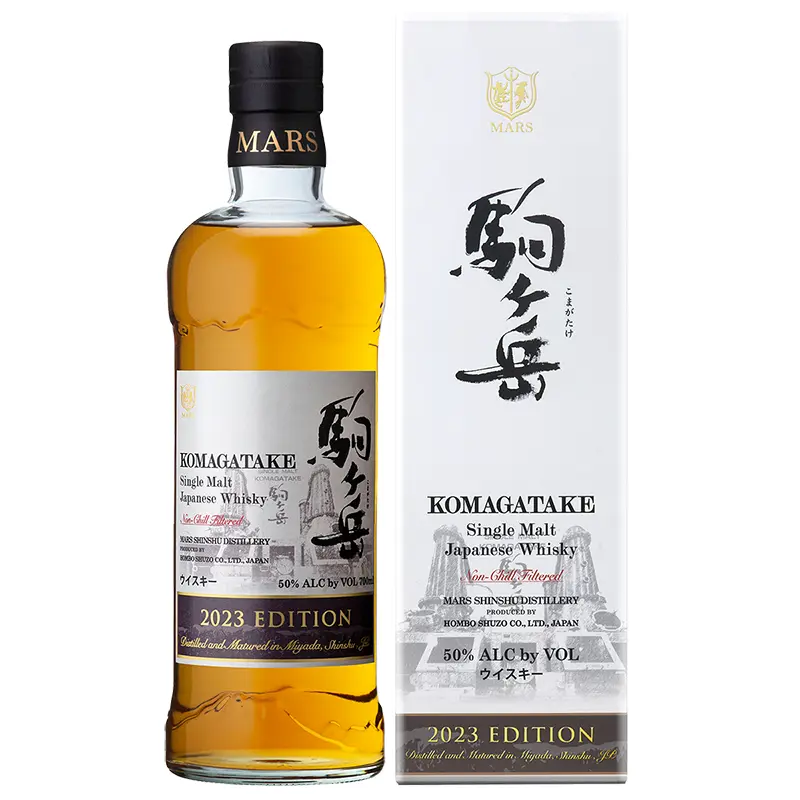
Hombo Shuzo (Mars)
Mars Komagatake Limited Edition 2023
Each year, Mars releases a limited edition Komagatake that showcases different cask combinations. The Mars Komagatake Limited Edition 2023 (48% ABV) features malt aged in American white oak and sherry casks, with fresh apple, pear, and honey on the nose.
These annual releases sell through quickly and are typically allocated. If you see one on a shelf, that is your window. Previous editions have varied in cask selection and flavor profile, but they consistently reflect the clean, fruity character that the Nagano distillery produces.
Mars also releases limited Komagatake expressions like the Nature of Shinshu series, IPA Cask Finish variants, and Yakushima Aging editions that showcase spirit matured at the island cellar. These are allocated even more tightly and mostly appear at auction or specialty retailers.
Premium: Tsunuki Single Malt

Hombo Shuzo (Mars)
Mars Tsunuki The First
Mars Tsunuki The First (59% ABV) was the inaugural single malt release from the Kagoshima distillery, introduced in 2020. At cask strength and distilled in a warm climate, it is a very different animal from Komagatake.
Nose: Rich tropical fruit, mango, honey, vanilla, warm maltiness Palate: Full bodied with tropical fruit, caramel, dark honey, dried fruit, rich oiliness Finish: Long and warming with lingering fruit sweetness and gentle oak
The Kagoshima heat gives Tsunuki a richness and intensity that Komagatake does not aim for. If Komagatake is the elegant alpine hiker, Tsunuki is the bold southern farmer. The higher angel’s share means less whisky survives aging, which partly explains the limited availability and higher price.
Tsunuki is JSLMA compliant. The distillery has continued releasing limited single malt editions annually, including the Tsunuki 2024 Edition, though these remain difficult to source outside Japan.
The Blended Malts: A Note on JSLMA
Not everything in the Mars lineup qualifies as Japanese whisky under JSLMA standards.
Mars Maltage Cosmo (43% ABV) is a blended malt that combines spirit from Mars Shinshu with imported Scottish malt. It is light, approachable, and priced at the entry level, but it is not JSLMA compliant due to the imported components. If that distinction matters to you, the Iwai blends offer a genuine Japanese alternative at a similar price point.
At the other extreme, Mars Maltage 3+25 (46% ABV, 28 years old) is a collector tier blended malt that won the World’s Best Blended Malt Whisky award at the World Whiskies Awards in 2013. It blends malt from three distilleries (including Mars Shinshu and imported Scottish malt) aged for at least 25 years. It is also not JSLMA compliant, but at this price level and rarity, compliance status is secondary to the quality of the liquid. Very few bottles exist.
Other Bottles Worth Knowing
Mars produces several other expressions that you may encounter:
The Lucky Cat series features blended whiskies with cat themed labels. They vary by release and are popular as gifts, though quality is inconsistent across editions.
The Y.A. series showcases whisky aged at the Yakushima cellar, highlighting how the island’s climate shapes maturation differently from either distillery site.
Malt Duo collaborations pair Mars stock with whisky from other Japanese distilleries, including Chichibu. These are limited and collectible.
How Mars Compares
If you’re deciding between Mars and something else at the same price, here’s how the flavor profiles stack up.
Iwai 45 vs Nikka Days vs Suntory Toki: All three sit in the entry tier. Toki is the lightest (green apple, basil, built for highballs). Nikka Days is soft and fruity (pear, peach). Iwai 45 is the warmest of the three: honey, toasted nuts, baking spice, with more body at 45% ABV. If you like bourbon, Iwai 45 is the closest fit. If you want something delicate, Toki or Nikka Days.


Mars Komagatake vs Hakushu Distiller’s Reserve vs Miyagikyo Single Malt: All three are lighter, fruit forward single malts. Hakushu has herbal, minty freshness. Miyagikyo has elegant pear and apricot. Komagatake lands between them: light honey, orchard fruit, and floral notes with a clean malt backbone. Komagatake tends to be easier to find (and cheaper) than Hakushu 12, which makes it a practical alternative.


Mars Tsunuki The First vs Yoichi Single Malt: Both are bold, full bodied single malts, but with completely different character. Yoichi is peaty, maritime, and smoky. Tsunuki is tropical (mango, dark honey, dried fruit) with a rich oiliness from Kagoshima’s warm climate aging. If you want intensity without smoke, Tsunuki is the pick.

The key differentiator for Mars is climate driven variety from a single producer. The same company makes a delicate alpine whisky (Komagatake) and a bold tropical one (Tsunuki), which is a range most small distilleries can’t offer.
The Two Distillery Climates
Mars uses geography the way Scotch distilleries use region to define character. The contrast between Komagatake and Tsunuki is extreme:
| Komagatake (Nagano) | Tsunuki (Kagoshima) | |
|---|---|---|
| Elevation | 798m (alpine) | Near sea level (coastal) |
| Climate | Cool, -15°C to 30°C | Warm, -2°C to 36°C |
| Angel’s share | 3 to 4% per year | 5 to 7% per year |
| Character | Light, delicate, floral, clean | Rich, tropical, oily, bold |
| Water | Granite filtered snowmelt | Local spring water |
| Style | Think Highland Scotch | Think island or Speyside sherried |
With a third aging site on Yakushima (subtropical island), Mars has a maturation palette that few small producers can match.
Where to Buy
Iwai blends are the easiest to find. High Road Spirits distributes them across the US, and they appear regularly at mid size liquor stores and online retailers. Availability in Europe and Asia varies by market.
Komagatake single malts require more hunting. The annual limited editions are allocated and tend to sell through quickly. Online specialists like [[retailer:The Whisky Exchange]] and Japanese whisky focused retailers are your best bet. Auction sites occasionally carry older editions.
Tsunuki single malts are the hardest to source. Most releases sell out in Japan before reaching export markets. Specialty Japanese whisky retailers and auction houses are the primary channels.
What to Buy First
If you have never tried Mars, start with Iwai 45. It is widely available, JSLMA compliant, and priced low enough that you are not risking much. Try it in a highball or an Old Fashioned to see how Mars’s grain driven blending style works.
If you already know you like Japanese single malt and want to explore beyond Suntory and Nikka, Mars Komagatake is the logical next step. The alpine character is distinctive, and it gives you a clear sense of what makes Mars different.
If you can find a Tsunuki release at a reasonable price, do not hesitate. The warm climate single malts from Kagoshima represent a style of Japanese whisky that very few other distilleries are producing, and production volumes are small enough that these will only get harder to find. der to find.