Suntory Explained: Yamazaki vs Hibiki vs Hakushu vs Toki vs Chita
The Quick Version
Suntory makes five core whisky brands, each with a distinct purpose. Yamazaki Distiller’s Reserve is the rich, fruity single malt. Hakushu Distiller’s Reserve is the fresh, herbal one. Hibiki Japanese Harmony blends whiskies from all three Suntory distilleries into something greater than the sum of its parts. Suntory Toki is the approachable highball mixer. And The Chita Single Grain is the light, sweet grain whisky most people overlook.
Here is what separates them, what each one costs, and which one belongs in your glass.
The Three Distilleries Behind Everything
Before diving into individual bottles, you need to understand the source. Every Suntory whisky comes from three distilleries, each producing a fundamentally different spirit.
Yamazaki sits on the outskirts of Kyoto, where three rivers converge. Founded in 1923 by Shinjiro Torii, it was Japan’s first commercial malt whisky distillery. The humid environment and diverse cask program (American oak, Spanish oak, and Japanese Mizunara oak) produce rich, fruity malts.
Hakushu is tucked into the forests of the Japanese Alps at 700 meters elevation. The cool mountain air and soft water create a completely different character: lighter, greener, and gently smoky. Hakushu uses lightly peated malt alongside unpeated, giving it a subtle smokiness unlike anything in Yamazaki’s profile.
Chita is the grain distillery, located on the Chita Peninsula in Aichi Prefecture. Using column stills and primarily corn, Chita produces the light, sweet grain whisky that forms the backbone of Suntory’s blends. It is also bottled on its own as The Chita.
These three distilleries are the building blocks. The single malts (Yamazaki, Hakushu) and single grain (Chita) are bottled individually. The blends (Hibiki, Toki, and the domestic market bottles) combine spirits from all three.
Yamazaki: The Flagship Single Malt

Suntory
Yamazaki Distiller's Reserve
Yamazaki is where Japanese whisky started, and it remains Suntory’s most prestigious single malt line. The house style leans toward red fruit, baking spice, and gentle oak, with Mizunara cask influence adding a distinctive sandalwood note in the aged expressions.
Nose: Strawberry, cherry, raspberry jam, vanilla, and light oak with floral hints. Palate: Smooth and fruity with red berries, baking spices, toffee, and a touch of cinnamon. Finish: Medium length with lingering berry sweetness and gentle spice.
The Distiller’s Reserve (no age statement) is the entry point. It highlights wine cask matured whiskies alongside bourbon and sherry cask components, giving it that signature red fruit character.
The Yamazaki Range


| Expression | Category | Price Tier | JSLMA Compliant | Best For |
|---|---|---|---|---|
| Distiller’s Reserve | Single Malt | Mid range | ✅ Yes | Exploring Yamazaki’s style without the age statement hunt |
| 12 Year Old | Single Malt | Premium | ✅ Yes | The classic. Beautifully balanced, often called the bottle that put Japanese whisky on the map |
| 18 Year Old | Single Malt | Collector | ✅ Yes | Deep, sherried complexity for special occasions |
| Limited Edition (annual) | Single Malt | Collector | ✅ Yes | Different cask composition each year, highly collectible |
The 12 Year Old is the sweet spot. It balances pineapple, peach, and grapefruit on the nose with coconut, butter, and cranberry on the palate, all tied together by Mizunara oak sandalwood on the finish. If you find one at a reasonable price, buy it.
The 18 Year Old goes deeper: dark chocolate, raisins, sherry, and blackcurrant with a full bodied, exceptionally long finish. Allocated and expensive, but genuinely exceptional.
Who should buy Yamazaki: Anyone who enjoys fruity, medium bodied single malts. If you like sherried Scotch (think Macallan or GlenDronach), Yamazaki’s style will feel familiar but with its own distinct character.
Hakushu: The Forest Distillery Malt

Suntory
Hakushu Distiller's Reserve
Hakushu is Yamazaki’s opposite in almost every way. Where Yamazaki is rich and fruity, Hakushu is fresh, green, and herbal. The distillery’s mountain location and the use of lightly peated malt create a profile closer to some Speyside or Highland Scotches, but with a distinctly Japanese crispness.
Nose: Fresh mint, green apple, cucumber, light smoke. Palate: Crisp and herbal with yuzu citrus, white peach, gentle smoke, and subtle sweetness. Finish: Clean and refreshing with lingering herbal and smoky notes.
The Hakushu Range


| Expression | Category | Price Tier | JSLMA Compliant | Best For |
|---|---|---|---|---|
| Distiller’s Reserve | Single Malt | Mid range | ✅ Yes | A gateway to Hakushu’s fresh, green style |
| 12 Year Old | Single Malt | Premium | ✅ Yes | The definitive “forest malt,” more depth and structure |
| 18 Year Old | Single Malt | Collector | ✅ Yes | Elegant balance of green fruit and gentle smoke |
The 12 Year Old adds depth to the Distiller’s Reserve profile: more defined mint and cucumber, crisper citrus, and a more structured smoky finish. It is one of the most refreshing aged whiskies you can find anywhere.
Who should buy Hakushu: Fans of lighter, aromatic whiskies. If you enjoy Glenmorangie, Glenfiddich, or even lightly peated expressions like Springbank 10, Hakushu will click. It is also a phenomenal highball whisky because those herbal, citrus notes cut through carbonation beautifully.
Hibiki: The Art of Blending

Suntory
Hibiki Japanese Harmony
Hibiki is Suntory’s showcase for what blending can achieve. It combines malt whiskies from both Yamazaki and Hakushu with grain whisky from Chita, and the result is something none of those distilleries produce alone: a silky, floral, harmonious whisky where no single element dominates.
Nose: Rose, lychee, light orange peel, and a faint hint of rosemary with subtle oak. Palate: Honey, candied orange, white chocolate, and a gentle woodiness. Silky smooth texture. Finish: Subtle and gentle with a lingering sweetness and a touch of Mizunara oak spice.
The iconic 24 faceted bottle represents the 24 seasons of the Japanese calendar (sekki), and that attention to aesthetics extends to the whisky itself.
The Hibiki Range
Suntory
Hibiki Japanese Harmony

Suntory
Hibiki Blender's Choice

Suntory
Hibiki 17 Year Old

Suntory
Hibiki 21 Year Old
| Expression | Category | Price Tier | JSLMA Compliant | Notes |
|---|---|---|---|---|
| Japanese Harmony | Blended | Mid range | ✅ Yes | The core expression, widely available |
| Blender’s Choice | Blended | Premium | ✅ Yes | Japan exclusive, wine cask emphasis, richer than Harmony |
| 17 Year Old | Blended | Collector | ✅ Yes | Discontinued in 2018, secondary market only |
| 21 Year Old | Blended | Collector | ✅ Yes | The pinnacle. Extraordinarily rare |
Hibiki Harmony is the expression most people will encounter, and it is excellent for what it is: a smooth, floral, approachable blend at a mid range price. The 17 Year Old was discontinued in 2018 due to stock shortages and is now a secondary market collector’s item. The 21 Year Old remains one of the most celebrated blended whiskies in the world.
For a detailed head to head, see our Hibiki Harmony vs Yamazaki 12 comparison.
Who should buy Hibiki: People who appreciate elegance over intensity. Hibiki rewards slow sipping. It is also a strong choice for whisky drinkers who find single malts too aggressive or too one dimensional. The blending creates layers that unfold gradually.
Toki: The Highball Whisky

Suntory
Suntory Toki
Toki exists for one purpose: making great highballs. “Toki” means “time” in Japanese, and this blend of Hakushu malt, Yamazaki malt, and Chita grain was created specifically as an accessible entry point to Japanese whisky, designed to shine with soda and ice.
Nose: Fresh basil, green apple, honey, and a subtle floral quality. Palate: Light and smooth with green apple, grapefruit, peppermint, and a delicate sweetness. Very approachable. Finish: Clean and short with a hint of vanilla, white pepper, and ginger.
Toki is not trying to be a sipping whisky, and judging it as one misses the point. Neat, it is thin and simple. In a highball, those light, clean flavors open up and become refreshing. This is what izakayas serve, and for good reason.
At its entry level price, it is the cheapest way into the Suntory ecosystem and genuinely fun as a daily highball.
Who should buy Toki: Highball lovers. Bourbon or Scotch drinkers curious about Japanese whisky who want a low commitment entry point. Anyone building a home bar on a budget who wants a versatile mixer.
The Chita: The Overlooked Grain Whisky

Suntory
The Chita Single Grain
Most people skip right past The Chita, and that is a mistake. This single grain whisky (made from corn using column stills) offers something genuinely different from the malt focused bottles above.
Nose: Light and sweet with honey, vanilla, corn, and delicate floral notes. Palate: Smooth and gentle with creamy vanilla, light honey, white pepper, and a clean sweetness. Very light body. Finish: Clean and short with a subtle sweetness and hint of mint.
The Chita is the quietest whisky in the Suntory lineup. It does not demand attention. Instead, it works beautifully as a palate cleanser between bolder drams, as a gentle highball, or as an introduction for people who think they do not like whisky. It is also fascinating from an educational standpoint: tasting Chita alongside Yamazaki or Hakushu makes you understand exactly what grain whisky contributes to blends like Hibiki and Toki.
Who should buy Chita: Curious drinkers who want to understand what grain whisky tastes like on its own. Wine drinkers transitioning to whisky. Anyone who finds most whiskies too intense.
The Domestic Lineup (Japan Only)
Suntory also produces several whiskies primarily for the Japanese domestic market. You will rarely find these outside of Japan, but they are worth knowing about.

Suntory
Suntory Kakubin

Suntory
Suntory Old Whisky

Suntory
Suntory Special Reserve
Suntory
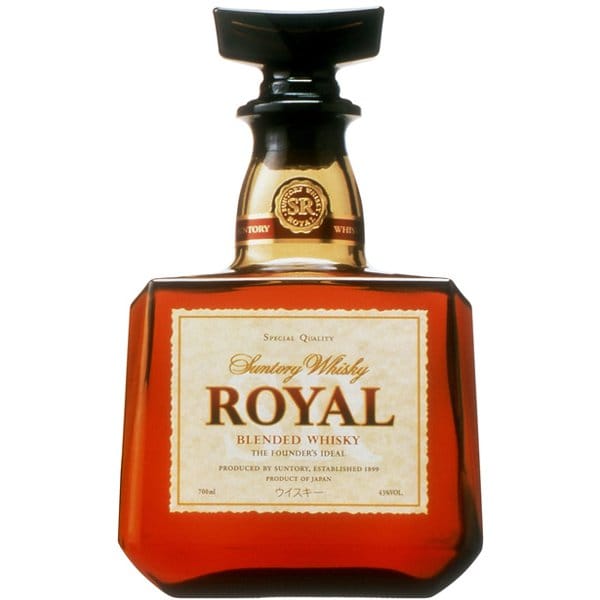
Suntory Royal
| Expression | Category | Price Tier | Notes |
|---|---|---|---|
| Suntory Kakubin | Blended | Entry | THE highball whisky in Japan. Served at virtually every izakaya. The distinctive square bottle is a cultural icon. |
| Suntory Old Whisky | Blended | Entry | Nicknamed “Daruma” for its rounded bottle shape. A beloved Showa era classic since 1950. |
| Suntory Special Reserve | Blended | Entry | A mid tier domestic blend, first released in 1969. Clean and easy drinking. |
| Suntory Royal | Blended | Mid range | Smooth and elegant, popular at bars and restaurants in Japan since 1960. |
Kakubin deserves special mention. It is the best selling whisky in Japan by a wide margin, and the backbone of the country’s highball culture. If you visit Japan, you will encounter it everywhere. The square bottle design dates to 1937.
A Note on Suntory Ao

Suntory
Suntory Ao World Whisky
Suntory Ao World Whisky is an interesting outlier. It blends whiskies from Suntory’s distilleries across five countries: Yamazaki and Hakushu in Japan, Jim Beam Clermont in the US, Ardmore and Glen Garioch in Scotland, Cooley in Ireland, and Alberta in Canada.
It is not JSLMA compliant because it uses non Japanese distilled whisky. The result is a smooth, complex blend at a mid range price, but it is fundamentally a world whisky wearing a Suntory label. Worth trying, but go in knowing what it is.
The Comparison Table
| Brand | Type | Distillery Source | Price Tier | JSLMA | Character in Three Words |
|---|---|---|---|---|---|
| Yamazaki | Single Malt | Yamazaki | Mid to Collector | ✅ | Rich, fruity, elegant |
| Hakushu | Single Malt | Hakushu | Mid to Collector | ✅ | Fresh, herbal, smoky |
| Hibiki | Blended | All three | Mid to Collector | ✅ | Silky, floral, harmonious |
| Toki | Blended | All three | Entry | ✅ | Light, clean, refreshing |
| Chita | Single Grain | Chita | Entry | ✅ | Sweet, gentle, subtle |
| Ao | World Blend | Global | Mid | ❌ | Smooth, complex, international |
Which Suntory Whisky Should You Buy First?
If you want to understand what Japanese whisky is all about: Start with Hibiki Japanese Harmony. It showcases Suntory’s blending philosophy and gives you a taste of all three distilleries in one glass.
If you want a single malt: Yamazaki Distiller’s Reserve for richness and fruit, or Hakushu Distiller’s Reserve for freshness and herbs. They are genuinely different experiences despite coming from the same company.
If you just want great highballs: Suntory Toki. Do not overthink it. Whisky, soda, ice, lemon peel. Done.
If you are exploring on a budget: The Chita Single Grain is entry level priced and teaches you something most whisky drinkers never bother to learn: what grain whisky tastes like before it gets blended.
If money is no object: Yamazaki 12 Year Old is the single malt benchmark. Hibiki 21 Year Old is the blending benchmark. Both are worth every penny if you can find them at reasonable prices.
All five core brands (Yamazaki, Hakushu, Hibiki, Toki, Chita) are fully JSLMA compliant, meaning they meet Japan’s standards for authentic Japanese whisky: distilled, aged, and bottled in Japan using domestic water sources. The only exception in Suntory’s lineup is Ao, which uses imported whiskies by design.
Keep Reading
- Hibiki Harmony vs Yamazaki 12: Which Should You Buy? for a deep dive into the two most popular Suntory bottles.
- What Is Japanese Whisky? The Complete Beginner’s Guide if you are new to the category.
- Best Japanese Whisky Under $100 for more Suntory picks alongside Nikka and others.
- Where to Buy Japanese Whisky Online for trusted retailers with current pricing.