Akkeshi Distillery: Hokkaido's Rising Star in Japanese Whisky
Quick Takeaway
- Craft distillery in eastern Hokkaido, founded 2016. Every release is JSLMA compliant.
- 24 Solar Terms series: 24 bottles released every three months, alternating between peated single malts and blends.
- Maritime, peated character often compared to Islay, but with a Japanese identity. Coastal location, kelp influenced water.
- Luxury tier, sells out quickly. Expect secondary market premiums. Start with: Akkeshi Single Malt Boshu or Keichitsu.
Why Akkeshi Matters
Japanese whisky has been dominated by two names for a century: Suntory and Nikka. Akkeshi is part of a new generation of craft distilleries that is changing that. But where most craft Japanese distilleries aim for delicate, fruity styles, Akkeshi goes in the opposite direction: big, peated, coastal whisky inspired by Scotland’s Islay.
What makes Akkeshi more than just an Islay imitator is the commitment to terroir. The distillery doesn’t just borrow Islay’s techniques. It uses what Hokkaido provides: local peat from the wetlands surrounding the distillery, water from the peat filtered Homakai River, Hokkaido grown barley, and Hokkaido harvested mizunara oak for cask aging.
The result is whisky that draws comparisons to Ardbeg and Laphroaig but tastes like nowhere else.
The Distillery
Location and Climate
Akkeshi sits in the town of Akkeshi (厚岸町), a small fishing community in eastern Hokkaido best known for its oysters. The town is one of the most remote and sparsely populated areas in Japan.
The climate is the key to Akkeshi’s character. Summer temperatures average around 18°C and winter drops to around minus 6°C. Fog rolls in regularly from the Pacific Ocean, keeping the air damp and cool throughout the year. For context, Islay averages about 14°C in summer and 4°C in winter. Akkeshi’s conditions are colder and harsher, but the coastal humidity and fog patterns are strikingly similar.
Beneath the distillery lies a 1.2 meter thick layer of peat. The surrounding wetlands, over 13,000 acres of which are protected under the Ramsar Convention, supply the peat that eventually filters into the local water table and gives Akkeshi’s spirit its earthy, coastal backbone.
Who Built It
Akkeshi was created by Kenten Jitsugyo (堅展実業), a Tokyo based trading company. The company’s CEO, Keiichi Toita, traces his passion for whisky to his first encounter with Ardbeg 17 at a Ginza bar. Kenten Jitsugyo had been exporting Japanese whisky since 2010, and with aged Japanese stock growing scarce, the company decided to build its own distillery rather than compete for dwindling supply.
The company’s background in food and dairy manufacturing shows in an unusual way: the distillery follows HACCP food safety standards. Workers wear sanitary covers and hair nets. It looks more like a food factory than a traditional whisky distillery.
Construction began in 2015, and Akkeshi started distilling in October 2016. The first single malt Japanese whisky, Sarorunkamuy (an Ainu word for the Japanese crane), was released in February 2020.
Equipment and Production
Akkeshi’s setup is deliberately small:
- Mash tun: 1,000kg capacity, 5,000L
- Washbacks: 6 stainless steel vessels at 5,000L each
- Wash still: Forsyths, 5,000L
- Spirit still: Forsyths, 3,600L
- Annual output: approximately 300 kiloliters
The stills were imported from Forsyths in Scotland, the same coppersmith that supplies Islay distilleries. The distillery operates four warehouses: two dunnage style warehouses on site, one dunnage warehouse on Akkeshi Bay (exposing casks to direct maritime influence), and one rack style warehouse on a hill overlooking the bay. Each warehouse environment contributes different maturation characteristics.
The Islay Connection (and Where It Diverges)
Akkeshi’s founder was inspired by Islay, and the parallels are deliberate. The location was chosen for its peat bogs, coastal fog, and maritime climate. The equipment comes from the same Scottish fabricators. The goal was to create Japan’s answer to Islay’s smoky malts.
But the whisky itself is not a copy. Three things set Akkeshi apart:
Hokkaido peat. In April 2020, the distillery began cutting peat from bogs near the distillery itself. Hokkaido peat has a different botanical composition than Islay peat, producing smoke notes that lean more herbal and mineral, less medicinal.
Mizunara oak. Akkeshi uses Hokkaido grown mizunara casks for maturation, something no Islay distillery does. Mizunara adds sandalwood, incense, and coconut notes that have no equivalent in Scottish whisky. The Akkeshi Single Malt Hakuro release is particularly known for its prominent mizunara sandalwood aromatics.
Extreme temperature swings. Akkeshi’s roughly 24°C annual temperature range (compared to Islay’s roughly 10°C) accelerates cask interaction. The whisky breathes in and out of the wood more aggressively, pulling flavor faster. This is why Akkeshi releases at relatively young ages (most are under 6 years old) can show surprising depth and complexity.
If you like Ardbeg, Laphroaig, or Lagavulin, Akkeshi is worth exploring. But expect a different kind of peat: more coastal and herbal than medicinal, with those distinctive Japanese oak spice notes woven through.
The 24 Solar Terms Series
The 24 Solar Terms (二十四節気, Nijūshi Sekki) series is Akkeshi’s defining project. It is a collection of 24 whisky releases, each named after one of the traditional Japanese solar terms that divide the year into seasonal periods. The system originated in ancient China and has been part of Japanese culture for centuries.
The series launched in October 2020 and follows a specific pattern: single malt expressions alternate with blended whiskies, with a new release roughly every three months. Each bottle reflects not just its seasonal name but an evolution in Akkeshi’s maturing stock. As the series progresses, the whisky gets older and the cask combinations become more complex.
How the Series Works
- Single malt releases are bottled at 55% ABV and use only Akkeshi distilled malt whisky
- Blended releases are bottled at 48% ABV and combine Akkeshi malt with grain whisky
- Each release is limited production and typically sells out within days of release
- The series is designed to complete all 24 solar terms, making it a roughly six year project
Releases in Our Database
Here are the Akkeshi 24 Solar Terms releases we track, organized by release order:
Single Malt Expressions

The
Akkeshi Single Malt Kanro

The
Akkeshi Single Malt Usui
The
Akkeshi Single Malt Seimei

The
Akkeshi Single Malt Boshu
Akkeshi Single Malt Kanro (寒露, Cold Dew) represents autumn. Rich and smoky with dried plum, dark chocolate, and maritime influence.
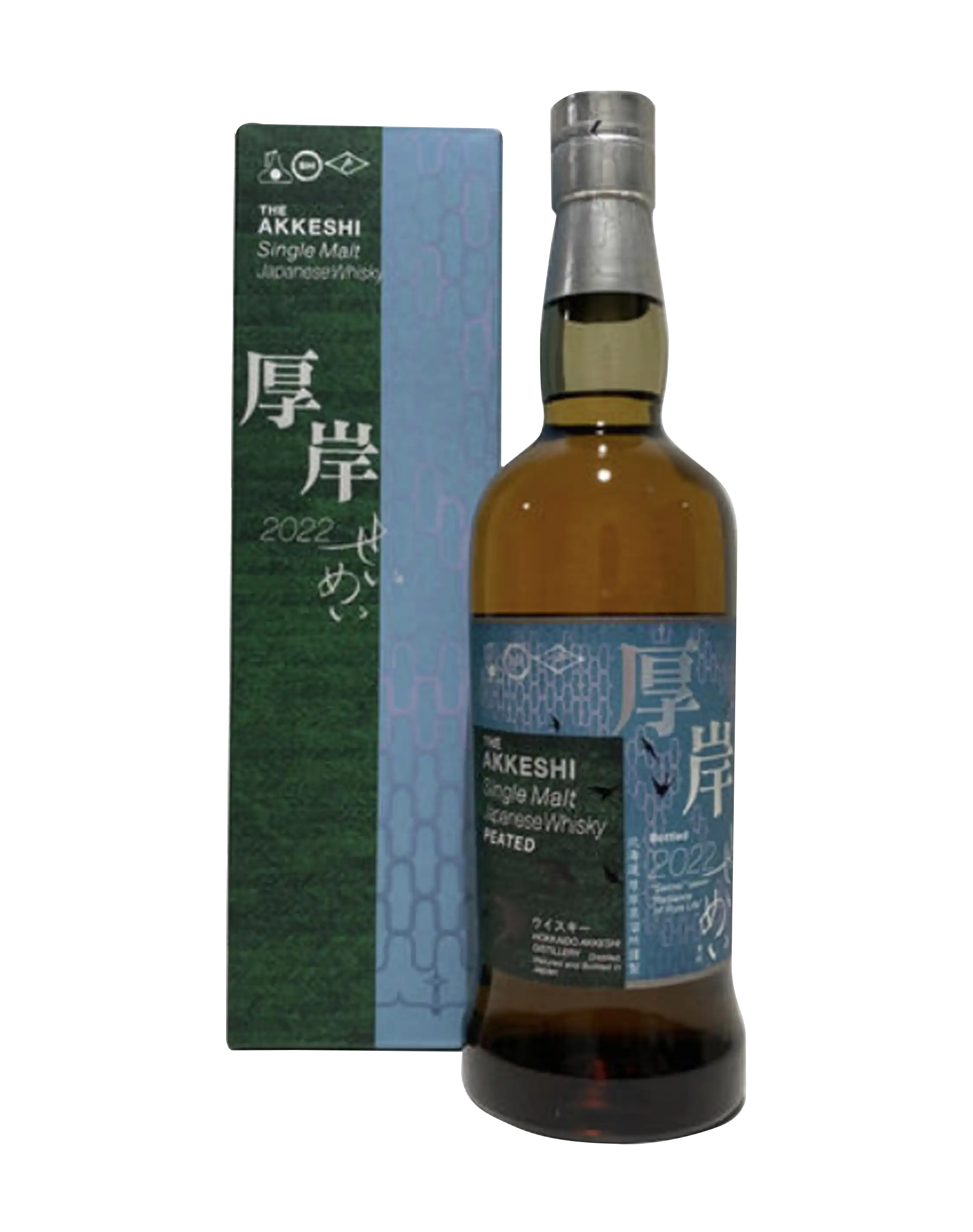
Akkeshi Single Malt Usui (雨水, Rain Water) captures late winter turning to spring. A lighter, more delicate expression with fresh rain, heather, and clean mineral peat.
Akkeshi Single Malt Seimei (清明, Clear and Bright) is spring: bright, lively, with white flowers, honey, and green apple balanced by gentle peat.
Akkeshi Single Malt Boshu (芒種, Grain in Ear) evokes early summer. Maritime salt, peat smoke, honey, and citrus on the nose. Complex layering of brine, smoked fish, and orchard fruit on the palate.

The
Akkeshi Single Malt Keichitsu
The
Akkeshi Single Malt Shunbun

The
Akkeshi Single Malt Hakuro

The
Akkeshi Single Malt Ritto

The
Akkeshi Single Malt Risshun
Akkeshi Single Malt Keichitsu (啓蟄, Insects Awaken) captures early spring energy: mandarin, honey, black tea, then rich peat with bittersweet chocolate and citrus brightness.
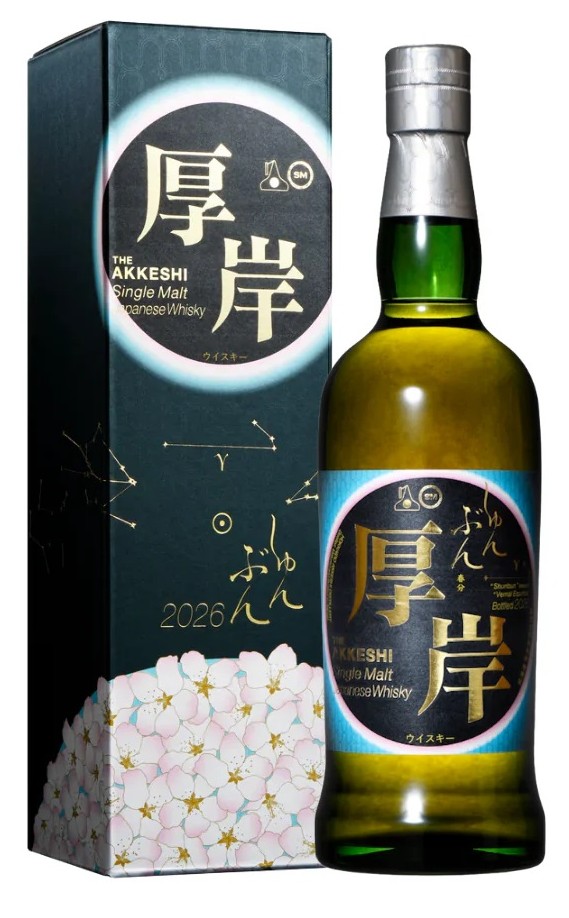
Akkeshi Single Malt Shunbun (春分, Spring Equinox) is about balance: cherry blossom, vanilla, stone fruit, and gentle smoke in perfect harmony.
Akkeshi Single Malt Hakuro (白露, White Dew) marks the transition from summer to autumn. Known for prominent sandalwood aromatics from mizunara cask aging, deep malt, and a bittersweet chocolate finish.
Akkeshi Single Malt Ritto (立冬, Beginning of Winter) leans into the darker side of the calendar. Floral chocolate and orange peel on the nose, then cocoa, brown sugar, and fresh fruit acidity on the palate, finishing with Akkeshi’s signature peat smoke. Matured in mizunara, sherry, and Pinot Noir wine casks.
Akkeshi Single Malt Risshun (立春, Beginning of Spring) is the first solar term in the calendar and the most heavily peated expression to date. Palo santo, sea salt, grilled persimmon on the nose. Big, bold, and smoky with charred wood and tropical fruit.
The
Akkeshi Single Malt Risshun
Blended Expressions

The
Akkeshi Blended Whisky Daikan
The
Akkeshi Blended Whisky Taisho

The
Akkeshi Blended Whisky Shoman
The
Akkeshi Blended Whisky Kokuu
Akkeshi Blended Whisky Daikan (大寒, Great Cold) represents the coldest period of the year. Sweet malt, dried fruits, and balanced grain with subtle oak spice at 48% ABV.
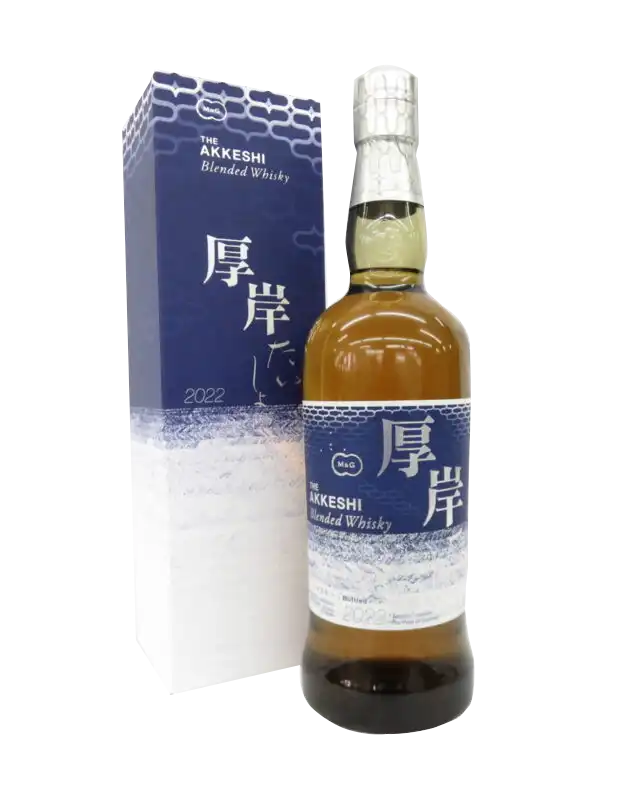
Akkeshi Blended Whisky Taisho (大暑, Great Heat) evokes the hottest season. Incense, cookies, fresh fruits transitioning to lactic richness, honey, chocolate, and a hint of passing peat.
Akkeshi Blended Whisky Shoman (小満, Nature Thrives) features malt matured in mizunara as the core, vatted with ex rum cask whisky for a tropical twist. Golden apple, muscat grapes, maple, and white pepper.
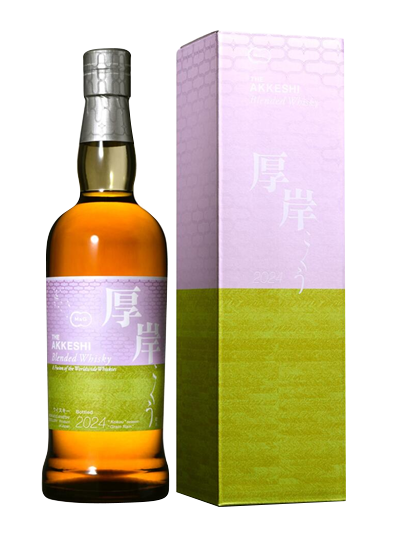
Akkeshi Blended Whisky Kokuu (穀雨, Grain Rain) uses Hokkaido grown malt matured primarily in ex bourbon and virgin American oak. Coffee, toasted nuts, charred wood, with warming spice.
The Pattern Behind the Bottles
Each solar term carries seasonal associations that inform the whisky’s character. Spring releases tend toward brightness, floral notes, and lighter peat. Summer releases bring richness and intensity. Autumn releases emphasize depth, dried fruit, and warming spice. Winter releases are about boldness and warmth.
This is not marketing language applied after the fact. The cask selections and blending decisions for each release are designed to evoke the season. The label designs also reference seasonal imagery: Ritto features Chitose candy (a Shichi Go San festival tradition), while Taisho’s indigo blue label echoes summer yukata kimono.
JSLMA Compliance
Every Akkeshi release in our database is JSLMA compliant. This means the whisky is made entirely from cereal grains, uses water from Japanese sources, is fermented, distilled, and aged in Japan for a minimum of three years in wooden casks, and is bottled in Japan at 40% ABV or higher.
This matters because many craft Japanese whisky brands rely on imported bulk whisky to supplement limited domestic stock. Akkeshi does not. Their blended expressions use grain whisky, but all components are distilled and aged in Japan.
For collectors and serious drinkers, this compliance is significant. JSLMA certification protects the value and authenticity of the whisky over time. For a deeper dive into what JSLMA compliance means, see our guide to real vs fake Japanese whisky.
Where to Find Akkeshi
Akkeshi is not easy to buy. Most releases sell out at retail within days, and secondary market prices can be two to three times the original retail price.
In Japan: Lottery systems at select retailers are the primary way to buy new releases at retail. Check specialty shops in Tokyo and Osaka for occasional secondary market bottles.
Internationally: Kenten (Akkeshi) works with High Road Spirits for US distribution. Bottles appear periodically at specialist retailers and auction houses like Whisky Auctioneer.
At the distillery: Akkeshi does not offer public tours or have a visitor center. The town is extremely remote, even by Hokkaido standards.
Which Bottles to Try First
If you find Akkeshi available at any price that does not make you wince, the question is which one to grab.
For peat lovers: Akkeshi Single Malt Risshun is the most heavily peated expression, with bold smoke, charred wood, and maritime salt. If you love Ardbeg or Laphroaig, this is your entry point.
For balanced drinkers: Akkeshi Single Malt Boshu delivers the full Akkeshi experience without overwhelming peat. Maritime notes, honey, citrus, and complex layering.
For mizunara curiosity: Akkeshi Single Malt Hakuro has the most prominent sandalwood and incense notes from mizunara aging. If you want to understand what Japanese oak brings to peated whisky, start here.
On a relative budget: The blended expressions (Daikan, Taisho, Shoman, Kokuu) are slightly more accessible than the single malts, both in price and in flavor intensity. Akkeshi Blended Whisky Kokuu is a good starting point, with approachable coffee and toasted nut notes over a smoky base.
The Bigger Picture
Akkeshi proves that Japanese whisky’s future is not just about Yamazaki and Hakushu. A distillery that has been operating for less than a decade is producing whisky that holds its own against established names. The combination of Islay inspired technique, Hokkaido terroir, and Japanese craftsmanship creates something genuinely new.
The 24 Solar Terms series, when complete, will be one of the most ambitious collection projects in whisky. Each bottle documents a distillery learning and evolving in real time, with the seasons of Hokkaido as the organizing principle.
Whether Akkeshi becomes the next great Japanese whisky name depends on what happens as their stock ages. The early signs are exceptional.