Fake Japanese Whisky: Brands to Avoid and How to Spot Them
Quick Takeaway
- At least 18 whiskies commonly sold as “Japanese whisky” don’t meet the JSLMA labeling standards. Many contain imported Scotch or Canadian whisky blended and bottled in Japan.
- Some are deliberately misleading. Japanese imagery, kanji on labels, vague origin claims. The liquid inside could be from anywhere.
- Some are honest about it. Brands like Suntory Ao and Ichiro’s Malt & Grain World Blended Whisky openly label themselves as world blends.
- The difference matters when you’re paying Japanese whisky prices for whisky that may have been distilled in Scotland or Canada.
- Use our JSLMA compliance list to check any bottle, or try the whisky authenticity checker before you buy.
Why This Problem Exists
Until February 2021, Japan had zero regulations defining “Japanese whisky.” Any company could import bulk Scotch, blend it in a warehouse in Osaka, and slap a label with a samurai and some kanji on the bottle. Legally, it was Japanese whisky.
The JSLMA (Japan Spirits & Liqueurs Makers Association) changed that by introducing voluntary labeling standards. To use the term “Japanese Whisky,” a product must now be fermented, distilled, and aged at least three years in Japan, using water sourced in Japan and malted grains. The transition period ended on April 1, 2024.
The catch: these standards are voluntary and only apply to JSLMA members. Non-member brands can still label anything “Japanese whisky” with no consequences. And even some JSLMA member products don’t qualify because they use imported whisky components.
The result is a market where bottles sitting side by side on the same shelf can mean completely different things.
The 18 Non-Compliant Whiskies in Our Database
We track JSLMA compliance for every whisky in our directory. Here are the bottles currently flagged as non-compliant, grouped by what’s going on with them.
Misleading Sourced Brands: The Ones to Watch Out For
These are the bottles most likely to mislead buyers. They use Japanese branding, vague origin claims, and label designs that suggest authenticity. The base whisky comes from undisclosed or foreign sources.
Kurayoshi Pure Malt
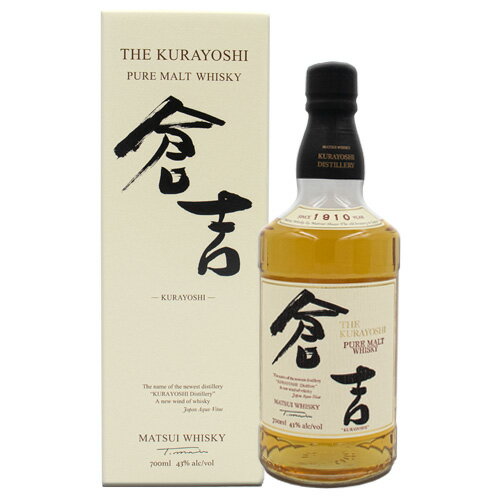
Matsui Shuzo
Kurayoshi Pure Malt
Matsui Shuzo has been one of the most controversial names in Japanese whisky. Their Kurayoshi Pure Malt bottlings historically contained imported Scottish bulk malt, not whisky distilled at Kurayoshi. Matsui Shuzo has since built a distillery, but older stock (which is what’s on shelves) predates their own production. The branding implies a heritage that doesn’t match the liquid inside.
What’s inside: Imported Scottish malt whisky, blended in Japan.
Hatozaki Pure Malt

Hatozaki
Hatozaki Pure Malt
Hatozaki Pure Malt comes from Kaikyo Distillery (Yonezawa Shuzo) in Akashi, Hyogo. The “Pure Malt” label and mizunara cask finish sound promising, but the base malt sources are undisclosed. The brand leans heavily on Japanese aesthetics without confirming that the whisky itself was distilled in Japan.
What’s inside: Malt whisky from undisclosed origins, finished in mizunara casks.
Tenjaku Blended

Tenjaku
Tenjaku Blended Japanese Whisky
Tenjaku Blended Japanese Whisky uses imported Scotch malt whisky blended with domestic grain spirit. It was one of the first brands to flood the international market at budget prices. The label says “Japanese Whisky” but the contents don’t meet JSLMA standards. Tenjaku itself doesn’t even label it as Japanese Whisky anymore on newer releases, which tells you something.
What’s inside: Imported Scotch malt blended with Japanese grain spirit.
Kensei
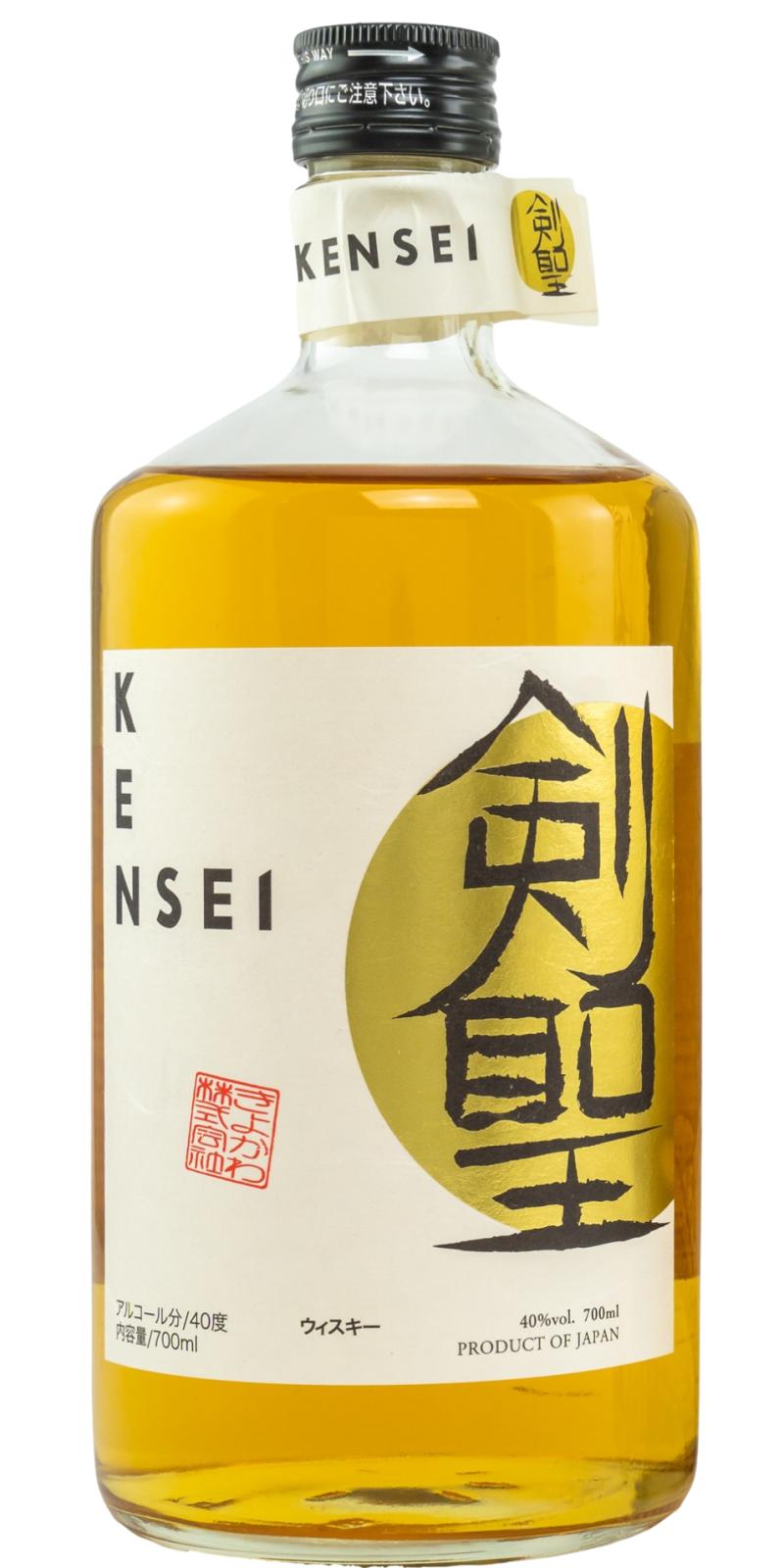
Kensei
Kensei Japanese Whisky
Kensei Japanese Whisky is an NDP (non-distiller producer) brand with no distillery attribution. The name means “sword saint,” and the marketing leans into samurai imagery. There’s no transparency about where the whisky comes from. It’s widely distributed at low price points in the US, making it one of the most commonly encountered non-compliant bottles.
What’s inside: Sourced whisky, origin undisclosed.
Kaiyo Mizunara Aged

Kaiyo Whisky
Kaiyo Mizunara Aged
Kaiyo Mizunara Aged leads with “mizunara oak” and an ocean aging concept. The marketing is compelling. But the base whisky sources are undisclosed, and Kaiyo Whisky doesn’t confirm where the spirit was distilled. The mizunara finish is real, but finishing imported whisky in Japanese wood doesn’t make it Japanese whisky.
What’s inside: Sourced whisky from undisclosed origins, finished in mizunara oak.
Kamiki Intense
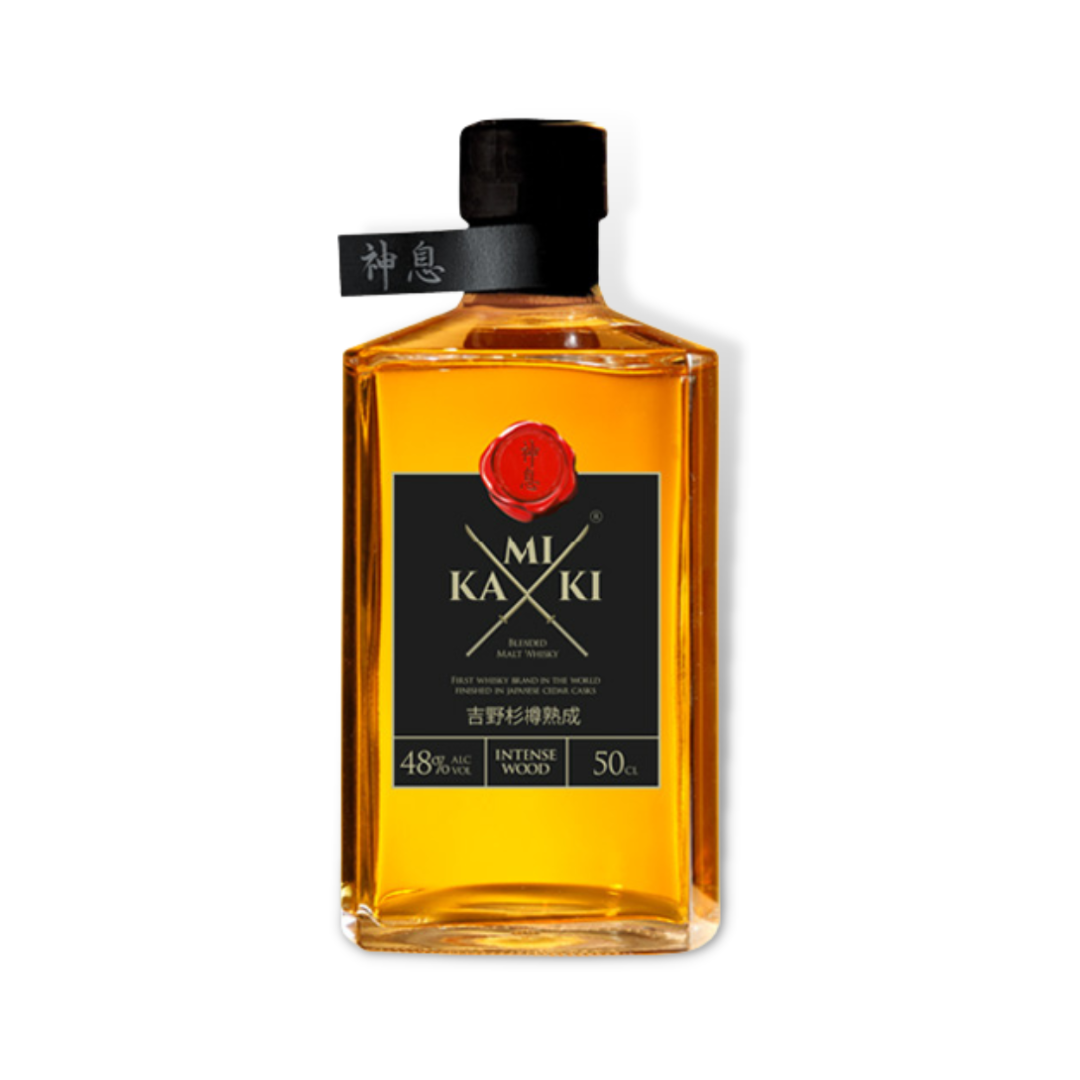
Yoshino Spirits
Kamiki Intense Wood Blended Malt
Kamiki Intense Wood Blended Malt from Yoshino Spirits is finished in Japanese cedar (yoshino sugi) casks, which gives it an unusual, almost incense-like character. Interesting flavor experiment, but the base spirit origin is undisclosed. Another NDP brand where the wood finishing is the story, not the whisky itself.
What’s inside: Sourced blended malt, origin undisclosed. Finished in Japanese cedar.
Enso
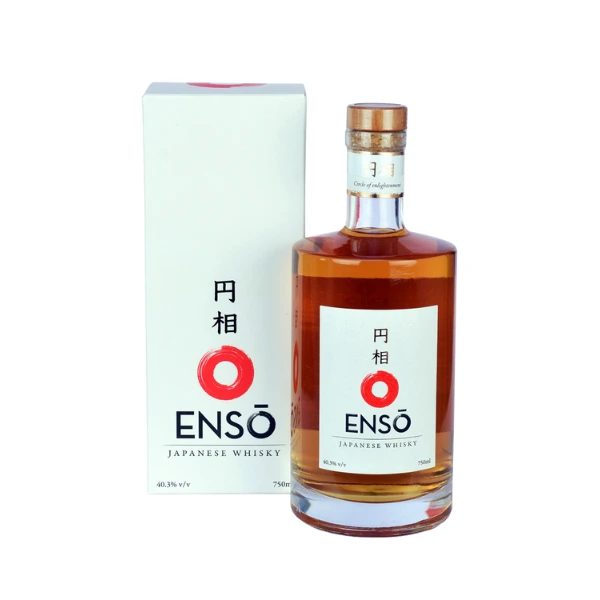
Enso
Enso Japanese Whisky
Enso Japanese Whisky has attractive minimalist packaging with a Zen enso circle on the label. The aesthetic screams Japan. The liquid? Imported bulk whisky blended in Japan. Enso is another export-focused NDP brand capitalizing on the Japanese whisky aesthetic.
What’s inside: Imported bulk whisky, blended in Japan.
Shin Serene

Shin
Shin Serene Japanese Whisky
Shin Serene Japanese Whisky is another NDP brand made for the export market. Despite Japanese-themed packaging, the origin of the spirit is undisclosed. Shin offers multiple expressions, all following the same playbook: Japanese branding, undisclosed sourcing.
What’s inside: Sourced whisky, origin undisclosed.
Imported Component Brands: Honest Companies, Non-Compliant Products
These come from reputable Japanese producers who are transparent about using imported whisky. The products aren’t trying to deceive anyone, but they don’t qualify as “Japanese Whisky” under JSLMA rules.
Nikka From The Barrel

Nikka
Nikka From The Barrel
This one surprises people. Nikka From The Barrel is a community favorite and legitimately great whisky. But it blends Yoichi and Miyagikyo malts with Coffey grain whisky plus imported malt from Ben Nevis distillery in Scotland. Nikka owns Ben Nevis, and the imported component is part of the blend’s character. Nikka is honest about this: they don’t label it as “Japanese Whisky.”
Great whisky. Not technically Japanese whisky.
What’s inside: Japanese malt (Yoichi, Miyagikyo) + Japanese grain (Coffey still) + imported Scottish malt (Ben Nevis).
Nikka Days

Nikka
Nikka Days
Nikka Days is designed for everyday drinking and highballs. Like From The Barrel, it uses imported bulk whisky components. Nikka doesn’t position it as Japanese Whisky. It’s a solid, approachable blend, just not a JSLMA-compliant one.
What’s inside: Japanese and imported whisky components.
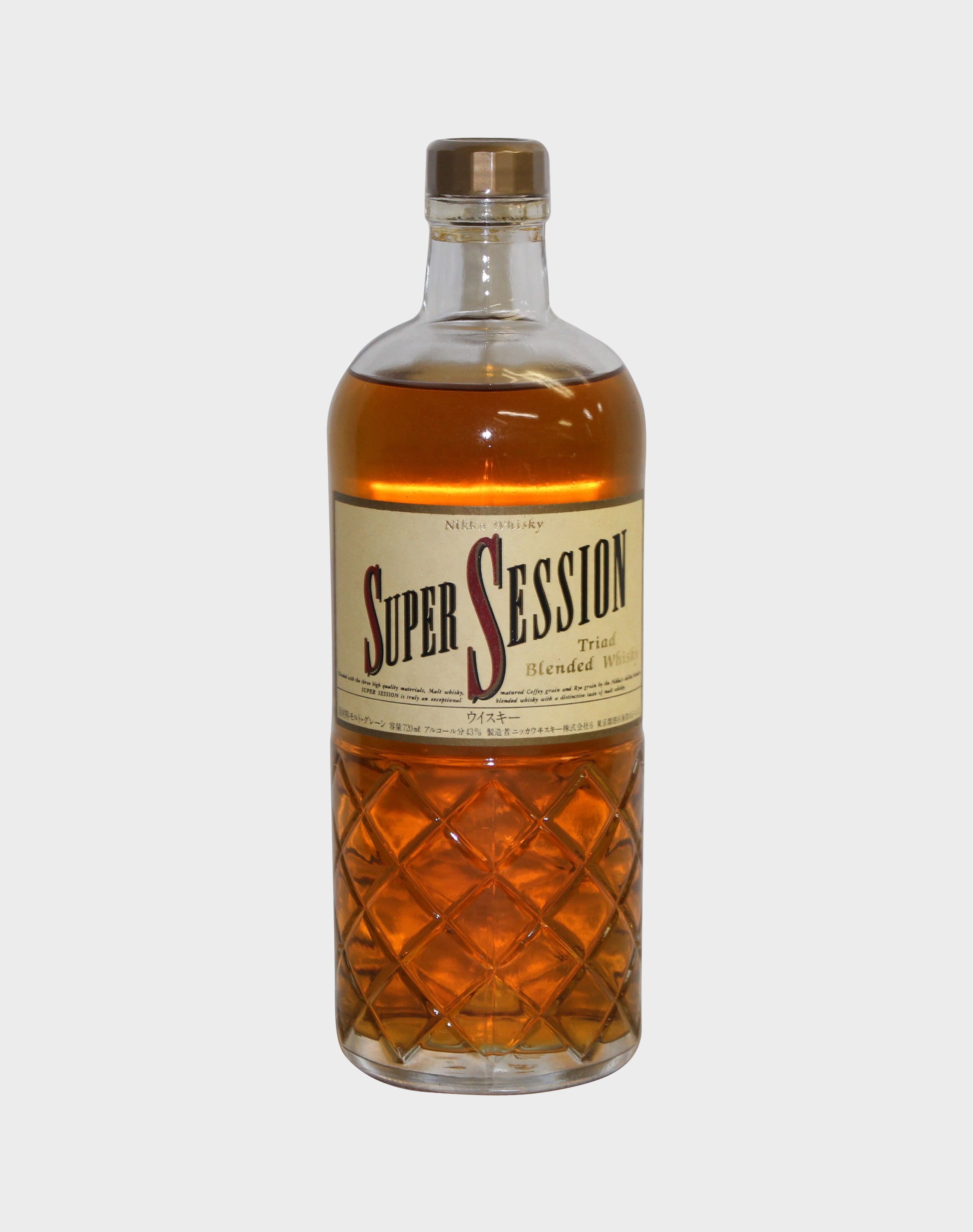
Nikka Session
Nikka
Nikka Session
Nikka Session is explicitly a blend of Japanese malt (Yoichi, Miyagikyo) with Scottish malt from Ben Nevis. The name evokes a musical “session” of different malts. Nikka is upfront about the international blend concept.
What’s inside: Japanese malt + Scottish malt (Ben Nevis).
Togouchi Premium and Togouchi 18


Togouchi Premium and Togouchi 18 Year Old come from Chugoku Jozo (now Sakurao Distillery) in Hiroshima. They’re matured in a former railway tunnel in the mountains, which is genuinely interesting. But the whisky itself is imported Scottish and Canadian malt and grain. The 18 year age statement predates Sakurao’s own distillery operations (opened 2018), confirming the liquid is imported aged spirit. Newer Sakurao-branded releases will be different, but anything labeled Togouchi should be considered non-compliant.
What’s inside: Imported Scottish and Canadian whisky, matured in Japan.
Mars Maltage Cosmo

Hombo Shuzo (Mars)
Mars Maltage Cosmo
Mars Maltage Cosmo from Hombo Shuzo blends malt from Mars Shinshu distillery with imported Scottish malt. It’s named after Mount Cosmo (Koshimo) near the distillery. An approachable blend, but not 100% Japanese production.
What’s inside: Japanese malt (Mars Shinshu) + imported Scottish malt.
Transparent World Blends: Not Trying to Fool You
These brands are open about blending whisky from multiple countries. They don’t claim to be Japanese whisky. Including them here because they show up in “Japanese whisky” searches and shelves, and you should know what they are.
Suntory Ao

Suntory
Suntory Ao World Whisky
Suntory Ao is a deliberate world blend from Suntory, combining whiskies from their distilleries across Japan, Scotland, Ireland, the US, and Canada. The bottle says “World Whisky” right on it. Not trying to be Japanese whisky. This is Suntory showcasing their global portfolio.
What’s inside: Blended whisky from five countries, including Yamazaki and Hakushu components from Japan.
Ichiro’s Malt & Grain World Blended

Venture Whisky
Ichiro's Malt & Grain World Blended Whisky
Ichiro’s Malt & Grain World Blended Whisky from Venture Whisky blends Chichibu malt with imported grain and malt from Scotland, Ireland, the US, and Canada. It’s labeled “World Blended Whisky.” Ichiro Akuto is transparent about the concept. Chichibu’s own single malt releases are fully JSLMA-compliant.
What’s inside: Chichibu malt + imported grain and malt from multiple countries.
Amahagan World Malt Edition No. 3

Nagahama Roman Beer
Amahagan World Malt Edition No. 3
Amahagan World Malt Edition No. 3 from Nagahama Distillery blends imported malt with their own Nagahama spirit, finished in mizunara oak. The “World Malt” label is right in the name. Nagahama’s own single malt releases are a separate category.
What’s inside: Imported malt + Japanese malt (Nagahama), finished in mizunara oak.
Edge Case
Ohishi Sherry Cask

Ohishi Distillery
Ohishi Whisky Sherry Cask
Ohishi Whisky Sherry Cask is genuinely unusual. Ohishi Distillery in Kumamoto makes a rice-based spirit (from their shochu tradition) aged in sherry casks. It’s technically not whisky by most global definitions, which require malted grain. The JSLMA standards don’t cover rice-based spirits. Interesting product, but it sits outside the category entirely.
What’s inside: Rice-based spirit aged in sherry casks. Not grain whisky.
How to Spot Non-Compliant Bottles Yourself
You don’t need to memorize every brand name. Here are the red flags that apply across the board.
No Distillery Name on the Label
Legitimate Japanese whisky producers want you to know which distillery made it. If the label shows a samurai, some kanji, and a vague reference to “the mountains of Japan” but no distillery name, be suspicious.
Age Statements That Don’t Add Up
If a distillery was licensed in 2017 and they’re selling a 12 year old whisky, that whisky wasn’t made there. Check our JSLMA compliance list for distillery histories.
”Blended Whisky” From Small Producers
Japan has very few grain whisky distilleries: Suntory’s Chita, Kirin’s Fuji Gotemba, and Nikka’s Miyagikyo (Coffey stills). If a small brand is selling “blended whisky” (not “blended malt”), the grain component almost certainly came from outside Japan.
Suspiciously Low Prices
A genuine 3 year old Japanese single malt from a craft distillery costs a significant amount even in Japan. If you’re seeing a “Japanese whisky” for under $30 outside Japan, the economics don’t work unless imported bulk whisky is involved.
40% ABV From Unknown Brands
Craft Japanese whisky distilleries tend to bottle at 46% ABV or higher. Companies stretching imported bulk whisky into more bottles typically water down to the minimum legal 40%.
Not Sold in Japan
This is a telling sign. If a “Japanese whisky” brand doesn’t have a domestic market in Japan, it’s almost certainly an export play built on bulk imports. Try searching the brand name + ウイスキー on Amazon Japan or Rakuten.
Use Our Tools
We built two things specifically for this problem:
JSLMA Compliance List: Every whisky in our database, tagged as compliant or non-compliant. Searchable and regularly updated.
Whisky Authenticity Checker: Enter a bottle name and get an instant compliance check against our verified data.
Bookmark them. Use them in the store. They’re free.
What to Buy Instead
If you want verified Japanese whisky, here are JSLMA-compliant bottles at different price points:
Entry level: Suntory Kakubin, Iwai 45, Akashi White Oak Single Malt
Mid range: Nikka Coffey Grain Whisky, Nikka Coffey Malt Whisky, Miyagikyo Single Malt, Hakushu Distiller’s Reserve
Premium and above: Hibiki Japanese Harmony, Kanosuke Single Malt, Fuji Single Malt
For a full breakdown, see our best Japanese whisky guide or the best bottles under $100.
The Bigger Picture
Non-compliant doesn’t always mean bad whisky. Nikka From The Barrel is one of the best blended whiskies you can buy at any price, from any country. Suntory Ao is a fascinating project from a legendary producer. These are good products that happen to include non-Japanese components.
The issue is transparency, not taste. When a bottle with no distillery attribution, samurai label art, and the words “Japanese Whisky” costs $25 on a US shelf, someone is counting on you not knowing the difference.
Now you do.
For the full story on what the JSLMA standards require and why they matter, read our complete guide to JSLMA standards. And check any bottle against our JSLMA compliance list or authenticity checker before you buy.